Early November 2026 is delivering one of the sharpest cost-versus-price collisions the construction chemicals industry has seen this year. Asphalt — the backbone of waterproofing membrane production — has reversed hard from its October spike, yet China’s leading waterproofing manufacturers are pushing through fresh price increases that were planned when feedstock looked far more expensive. Meanwhile, PCE superplasticizer monomers are holding firm on ethylene oxide support, and Europe’s building chemicals majors closed Q3 with momentum. Here is what buyers of cellulose ethers, RDP, admixtures and waterproofing raw materials need to know.
China Waterproofing: Price Hikes Land Just as Costs Collapse
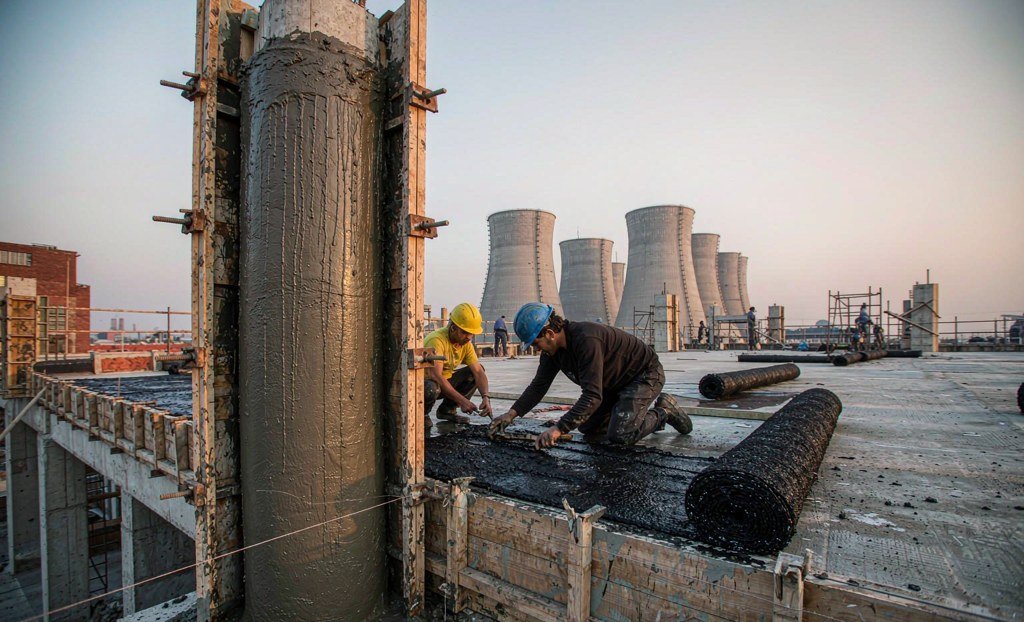
The headline story is a textbook timing mismatch. As this publication reported through September and October, China’s waterproofing industry launched a coordinated wave of price increases driven by record asphalt costs — spot prices had pushed above RMB 5,300 per tonne, and futures briefly traded even higher as Brent crude spiked toward USD 113 per barrel in mid-October.
That cost logic has now inverted. Brent crude fell 16.5% in just four sessions — from USD 113.43 to USD 94.62 — after geopolitical risk premiums unwound, and domestic asphalt spot prices dropped 3.06% week-on-week to around RMB 6,100 per tonne, with futures sliding below RMB 5,000 at one point. Yet the price increases keep landing:
- Sanshu announced a 15–20% increase across select waterproofing product lines effective November 5 — its third hike of 2026.
- Oriental Yuhong, the market leader, posted a Q3 net profit decline of 82% under raw-material pressure, and is countering with its “3615 Plan” renovation partner program to shift volume toward retail and repair channels with better margins.
- Follow-on increases from Keshun, Dayu and others that took effect in late September remain in place, effectively locking in the higher price floor even as feedstock retreats.
For distributors and formulators, the takeaway is that list prices rarely fall as fast as they rise. The top three players now hold roughly 60% of the Chinese market, giving them pricing power that outlasts the cost cycle. Expect margins to recover at the manufacturers while downstream buyers face a sticky price environment through Q4 — even with asphalt costs well below their October peak.
A structural note for international buyers: the new JC/T 3005-2026 standard for root-penetration resistant waterproofing coatings took effect November 1, adding another layer of technical specification alongside GB/T 18445-2025, which took effect January 1 and was the first national standard to define “self-repair capability.” Chinese-produced membranes meeting these standards are becoming a quality benchmark for export markets, particularly infrastructure and urban-renewal projects.
PCE Monomers: EO Support Keeps the Cost Floor Firm
While asphalt reversed, polycarboxylate superplasticizer (PCE) monomer markets told a different story. Per ChemPriceHub data from November 4–5, East China EPEG held flat at RMB 10,400–10,600 per tonne, with HPEG and TPEG at RMB 10,500–10,700. Ethylene oxide — the dominant cost driver for PCE monomers — remained firm at around RMB 9,700 per tonne, capping any downside in monomer offers.
- Plant operating rates sit near 30.3%, still below the 35–40% typically reached in Q4 peak season — meaning supply is not yet chasing demand.
- Producer quotes from Mysteel show a wide band: Dehon at RMB 10,300–10,400, Fushun Xiulin at 10,400–10,600, and specialty producers quoting as high as RMB 12,400.
- Crude’s post-midterm slide (WTI fell 8.29% to USD 88.12 before rebounding 2.72% to USD 90.52) has not yet translated into lower EO contract pricing.
The logic mirrors what we described in September: EO-EG swing capacity diverts toward MEG when the ethylene glycol spread strengthens, tightening EO availability for PCE monomer producers. With concrete admixture demand entering the year-end construction window, monomer offers should stay firm at least through November. Buyers planning Q4 PCE purchases should lock volumes sooner rather than later.
European Majors Post Strong Q3 — Demand Signals for Additives
Europe’s building materials groups gave admixture and mortar additive suppliers reason for confidence in developed-market demand:
- Heidelberg Materials posted Q3 revenue of EUR 6.41 billion, up 10%, with recurring operating income up 9% to EUR 1.28 billion. Management added EUR 300 million to its savings program through 2028 and raised 2026 RCO guidance to EUR 3.40–3.65 billion.
- Holcim lifted full-year guidance to 10–12% growth after recurring operating profit jumped 17% to CHF 976 million in Q3, aided by the Cem’In’Eu acquisition adding 0.48 Mt of capacity.
- Saint-Gobain grew organic sales 2.5% in Q3, with its chemical building materials division up 6.3% in the quarter and 5.6% over nine months — the fastest-growing segment in the portfolio.
For a supplier of cellulose ethers and redispersible polymer powders, the signal is clear: dry-mix mortar and tile adhesive volumes in Europe and its export footprint are healthy, and the majors are investing rather than retrenching.
M&A Keeps Reshaping the Specialty Chemicals Map
Portfolio rotation accelerated again in early November:
- ALTA Performance Materials acquired BASF’s Palatal business in Chile (announced November 5), taking over vinyl ester and unsaturated polyester resin production at the Concón site — a reminder that even majors like BASF continue pruning non-core polymer assets that construction chemicals formulators depend on.
- Heidelberg Materials closed the NCC Industry acquisition, deepening its specialty products push.
- Saint-Gobain’s nine-month tally now stands at 17 acquisitions within a EUR 3.3 billion portfolio rotation, following its February close of Fosroc and the pending Xypex deal.
Consolidation matters for buyers: as assets change hands, supply agreements and regional distribution terms are frequently renegotiated — a window in which alternative suppliers from China and Southeast Asia can win share on both price and technical service.
CBAM Compliance Becomes a Sellable Service
Carbon accounting is no longer just a cost of doing business in the EU. Verification platform Isometric launched a “Ready for CBAM” service this month, timed to the EU Carbon Border Adjustment Mechanism’s definitive regime, with EUA prices having topped EUR 90 per tonne before a recent correction and EU–UK ETS linkage talks underway. Exporters of cement, ceramic and glass products into the EU now need audited embedded-emissions data — and the same data infrastructure is starting to reach downstream construction chemical suppliers as customers extend Scope 3 requirements up the chain. Manufacturers who invest in verified carbon footprints for HPMC, RDP and admixture products now will find it easier to keep European accounts open through 2027.
Cellulose Ethers: Regional Price Divergence and Cost-in-Use Thinking
On the cellulose ether front, regional price divergence remains stark. Mid-2026 benchmark data put methylcellulose ether (HPMC/HEMC) prices near USD 3,928 per tonne in the US, USD 4,339 in China, USD 3,270 in Germany and just USD 1,969 in India. As we move through late 2026, procurement teams are increasingly applying a cost-in-use methodology rather than comparing list prices: a lower-viscosity HPMC dosed at a higher rate can outperform a premium grade on finished-mortar cost, especially when water retention and open time requirements vary by climate. This framework is exactly how we advise Hosechem customers to evaluate our HPMC, HEMC and HEC grades against application-specific targets.
What to Watch Through Year-End
- Waterproofing price stickiness: watch whether Sanshu and Oriental Yuhong hold November list prices even as asphalt retreats toward RMB 5,500.
- EO direction: any MEG spread compression would free swing capacity back to EO and could soften PCE monomer offers by December.
- Cellulose ether operating rates: Chinese producers typically push utilization higher in Q4; a demand miss would pressure spot offers before the Spring Festival shutdown.
- CBAM enforcement: first definitive-regime declarations due in early 2027 will test whether suppliers’ emissions data holds up.
Partner with Hosechem for Q4 Supply
Navigating volatile feedstock cycles while meeting tightening standards — GB/T 18445-2025, JC/T 3005-2026, EU CBAM — demands a supplier with both technical depth and reliable capacity. Hosechem supplies HPMC, HEMC, HEC, CMC, redispersible polymer powder, PCE superplasticizers, PP fibers, defoamers, PVA and gypsum retarders to dry-mix mortar and construction chemicals producers in over 40 countries, with consistent quality documentation and application support for tile adhesives, self-leveling mortars, plaster and waterproofing formulations. Contact our team today for samples, COAs and a cost-in-use comparison tailored to your next project.


